


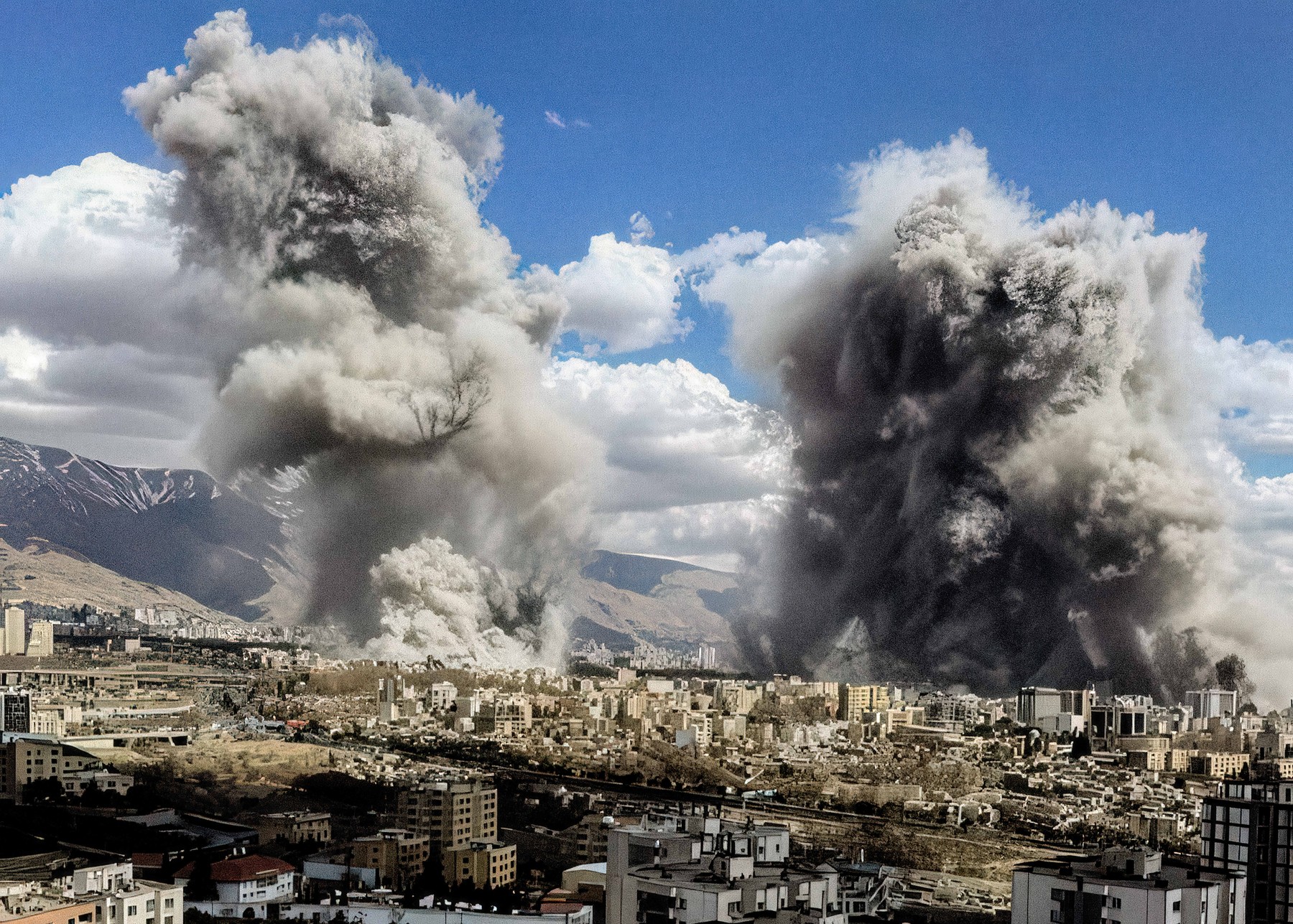
Influence of Trump’s Statements
Recent statements made by Donald Trump regarding the war in Iran have sparked a variety of controversies and have substantially impacted public opinion and the international political environment. His claim that „there’s practically nothing left to attack” has been viewed by some as an underestimation of the complexity and severity of the conflict in the region. This viewpoint has faced criticism from political leaders and analysts who argue that such statements could escalate tensions and negatively affect diplomatic efforts to find a peaceful resolution.
Moreover, Trump’s declarations have been perceived as a signal of weakness or a withdrawal of American support for its allies in the region. This has raised concerns among countries that rely on U.S. military and diplomatic backing to counter Iranian influence. Additionally, his rhetoric has been seen as a destabilizing factor that could encourage Iran to adopt a more aggressive stance in the ongoing conflict.
Domestically, Trump’s statements have elicited mixed reactions. His supporters view them as a continuation of his policy to avoid involvement in prolonged external conflicts, while his critics believe that his careless approach could have long-term adverse effects on global security. In this context, the impact of Trump’s remarks remains a topic of intense debate in both the United States and around the world.
Context of the War in Iran
The war in Iran, while not an open and officially declared conflict, involves a series of tensions and confrontations that have escalated over the past decades. The context of this war is intricate and encompasses historical, political, and religious factors that contribute to the current conflict. Iran, as a regional power, has exerted significant influence in the Middle East, and its nuclear ambitions and ballistic missile program have consistently raised alarms within the international community.
Following the United States’ withdrawal from the nuclear agreement in 2018, tensions increased significantly. The Trump administration’s decision to impose severe economic sanctions on Iran deteriorated relations and fostered an atmosphere of distrust. In response, Iran intensified its nuclear activities and supported proxy groups in the region, leading to a series of indirect confrontations with the United States and its allies.
Additionally, conflicts in Syria and Yemen, where Iran has strategic interests, have heightened regional tensions. Iran’s military presence in these countries and its support for Shiite armed groups have been viewed as a threat by Sunni countries in the region, particularly Saudi Arabia. These dynamics have fostered instability and transformed the region into a battleground for influence among various regional and international powers.
Amidst these tensions, the statements of leaders on both sides, including those of Donald Trump, play a crucial role in shaping perceptions and influencing foreign policies. Within this context, every action and reaction contributes to a complex geopolitical game, where the stakes are extraordinarily high and any misstep can have devastating consequences for regional and global stability.
International Reactions
Donald Trump’s statements have garnered varied responses from the international community. European leaders have expressed concern over the tone and content of his remarks, emphasizing the need for a diplomatic approach and constructive dialogue to prevent the escalation of the conflict. The European Union has reiterated its commitment to upholding international agreements and promoting stability in the region, while simultaneously criticizing the unilateral withdrawal of the United States from the nuclear deal with Iran.
Russia and China, on the other hand, have utilized Trump’s statements to bolster their position in the region. Both countries have advocated for a diplomatic solution and criticized the economic sanctions imposed by the United States, deeming them counterproductive and destabilizing. These states have underscored the necessity for international cooperation and have warned against unilateral actions that could further destabilize the region.
In the Middle East, reactions have varied. Saudi Arabia and Israel, traditional allies of the United States, have voiced their support for a firm stance against Iran but are concerned about the potential withdrawal of American support, as suggested by Trump’s statements. These countries are aware of the risks associated with an open conflict and desire to maintain a strong alliance with Washington to counter Iranian influence.
In contrast, Qatar and other nations in the region have called for caution and dialogue, fearing the consequences of an extended conflict on regional stability. These states have emphasized the importance of keeping communication channels open and avoiding inflammatory rhetoric that could lead to uncontrollable escalations.
Economic Perspectives and Consequences
The economic outlook of the conflict in Iran is complex and varied, considering the severe economic sanctions imposed by the United States and Iran’s economic responses. The sanctions have dramatically impacted the Iranian economy, drastically reducing oil exports and triggering an internal economic crisis. These measures have led to rampant inflation, devaluation of the national currency, and significant economic hardships for the Iranian population.
Simultaneously, the economic warfare has prompted Iran to seek new trade partners and diversify its income sources. Countries like China and Russia have become vital economic partners for Iran, providing an alternative market for its energy exports and supporting it against Western pressures. This economic realignment has the potential to alter power balances in the region and influence long-term international relations.
From a global perspective, the tensions in Iran have raised concerns about the stability of energy markets. Any escalation of the conflict could lead to rising oil and natural gas prices, impacting economies dependent on these resources. Additionally, the political and economic uncertainty in the region has the potential to disrupt supply chains and negatively affect international financial markets.
In the long term, the economic consequences of this conflict could include an increased fragmentation of the global economy, as countries reassess their alliances and trade strategies. In this context, international economic actors are compelled to adapt their business plans and manage the risks associated with instability in the Middle East. In conclusion, the economic prospects related to the war in Iran are intricate and rely on…
Sursa articol / foto: https://news.google.com/home?hl=ro&gl=RO&ceid=RO%3Aro